
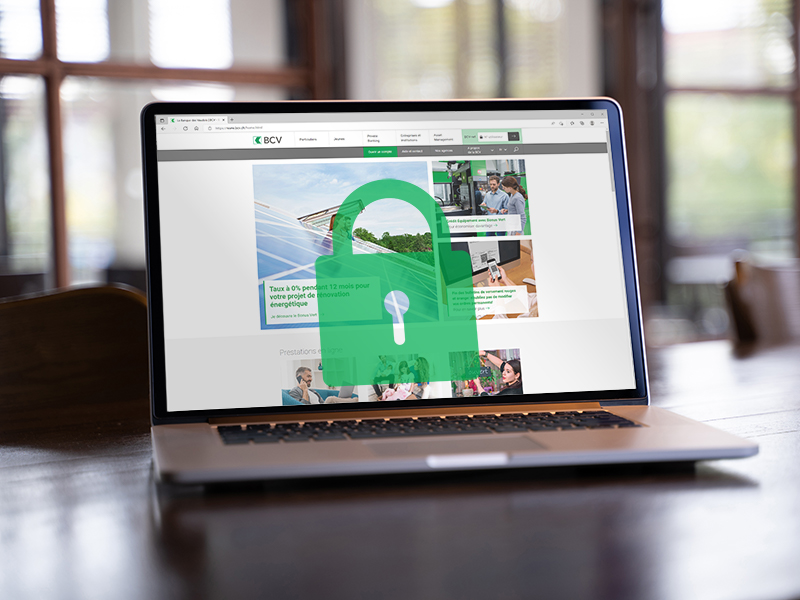



Following these simple steps will significantly lower your risk of falling victim to fraud when accessing BCV-net on the web or BCV Mobile on your phone.

Cybersecurity – mitigating the risk for your business
Cyberattacks can do extensive damage to a company’s finances, operations, and reputation. Find out how you can shield your business.



Improve your security profile by harnessing the services offered by different types of specialists.
- Specialist companies can provide cybersecurity audits, intrusion tests, 24/7 surveillance (Security Operations Center - SOC), and advisory services, tailored to the needs and scale of your business.
- They can also help you create multi-year roadmaps to steadily improve your level of protection.
- The Swiss National Cyber Security Centre (NCSC) issues recommendations and alerts and provides incident report forms that are available to all businesses.
- Swiss authorities have published guides and aide-memoires that indicate the best practices that SMEs can implement step by step.
If you suspect a cyberattack or other security incident, the priority is to limit the impact, while preserving the information needed to analyze the incident.
Shore up the situation
- Quickly isolate potentially compromised systems from the rest of the network (network cable, Wi-Fi, VPN), preferably without turning them off so that technical evidence can be preserved.
- Immediately change passwords on critical accounts (e-banking, email, servers, administration) and shut down any access that appears suspect.
Get the right people involved
- Inform senior management, the head of cybersecurity, and your IT provider right away.
- Contact your cybersecurity business partner to request system diagnostics and crisis-management support.
Inform the competent authorities
- Report the incident to the Swiss National Cyber Security Centre via their dedicated portal. This will help prevent future incidents, and you will receive a list of recommended measures to take.
- If personal data has been compromised, consult your legal team (or outside advisor) to assess whether data protection authorities should be informed.
Communicate with stakeholders and keep records
- Keep a chronological record of what happened, including the initial clues that something was amiss, the measures and decisions taken, and your communication with the parties involved.
- Prepare a clear, factual message to your employees (and to your customers and business partners, if necessary), in conjunction with your legal and communications teams.
Here are some common cyberattacks faced by businesses:
- An employee opens an email attachment containing malware that gradually encrypts the entire network, making it impossible to access data or systems for several days.
- Regularly tested, segregated backups and business continuity planning enable businesses to restore their systems and restart operations more quickly.
- A hacker takes control of an internal email account and amends an invoice so that the payment – often for a large amount – is made to an account outside Switzerland.
- By using dual authorization and requiring independent verification of changes to banking details, businesses can flag anomalies like these before the payment can be executed.
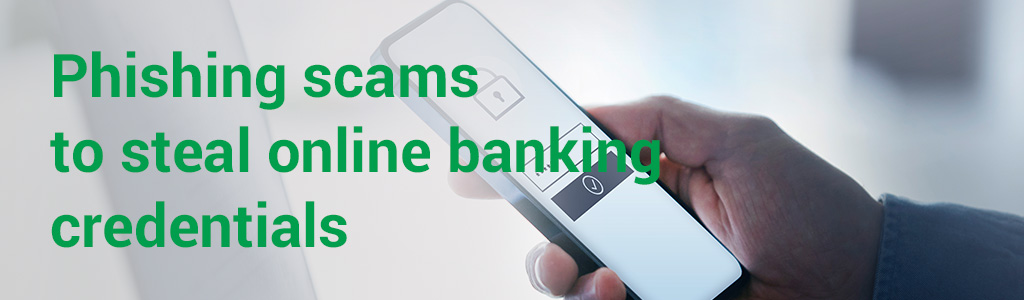
- An employee receives an email that appears to be from the company’s bank, asking them to click on a link to ‘secure’ their online banking access. The link redirects to a fraudulent website that records the employee’s login details for the scammers.
- If businesses train their employees to watch out for phishing scams and systematically check links before clicking, employees will be much more likely to identify such emails as malicious and not disclose any login details.

- https://www.cybermalveillance.gouv.fr/ (website in French)
- https://www.dailymotion.com/user/cybermalveillance (website in French)
Your BCV advisor is trained to advise you about cyber threats in connection with your business activities and how to securely use our online banking channels. For help implementing technical or organizational measures, we recommend that you contact your IT provider and other specialists as needed. The competent Swiss authorities can also provide useful information.
Write to us

If you are a BCV client with BCV-net, we suggest you log in to BCV-net and contact us using the secure messaging service.
Call us

We’re available Monday to Friday, from 8:00am to 6:00pm.
Visit us

Come to one of our branch offices.
Carefully check the domain name. Even if one letter is wrong, this indicates fraud.
Disconnect immediately from the internet, change your passwords, and contact your internet service provider.
Yes, you can report suspicious emails at cybercrimepolice.ch (website in French, German, or Italian).