
Since 21 November 2025, new SIX requirements concerning a standard address format for QR bills and payment orders have been in effect in Switzerland.
Changes to payment transactions
The Swiss interbank payment system has been gradually brought into line with new market standards over the past few years. These changes are making payment transactions smoother and easier by automating the data-transfer process across the country. We’re here to help you throughout the transition phase and to keep you informed of future changes.
A transition phase is currently underway. For now, financial institutions can still process payments with non-standard address formats – but not those with hybrid addresses, most of which must already meet the new requirements.
We recommend that you start using the standard address format in your QR codes and payment orders as soon as possible. To help you make the switch, we’ve put together this simple check-up.
To ensure your payments are processed correctly, please follow the minimum requirements in terms of address structure. At the very least the beneficiary’s name, town/city, and country must appear in separate fields.
Example of a structured address that meets the minimum requirements
<Nm>Jean Vaudois</Nm>
<PstlAdr>
<TwnNm>Lausanne</TwnNm>
<Ctry>CH</Ctry>
</PstlAdr>
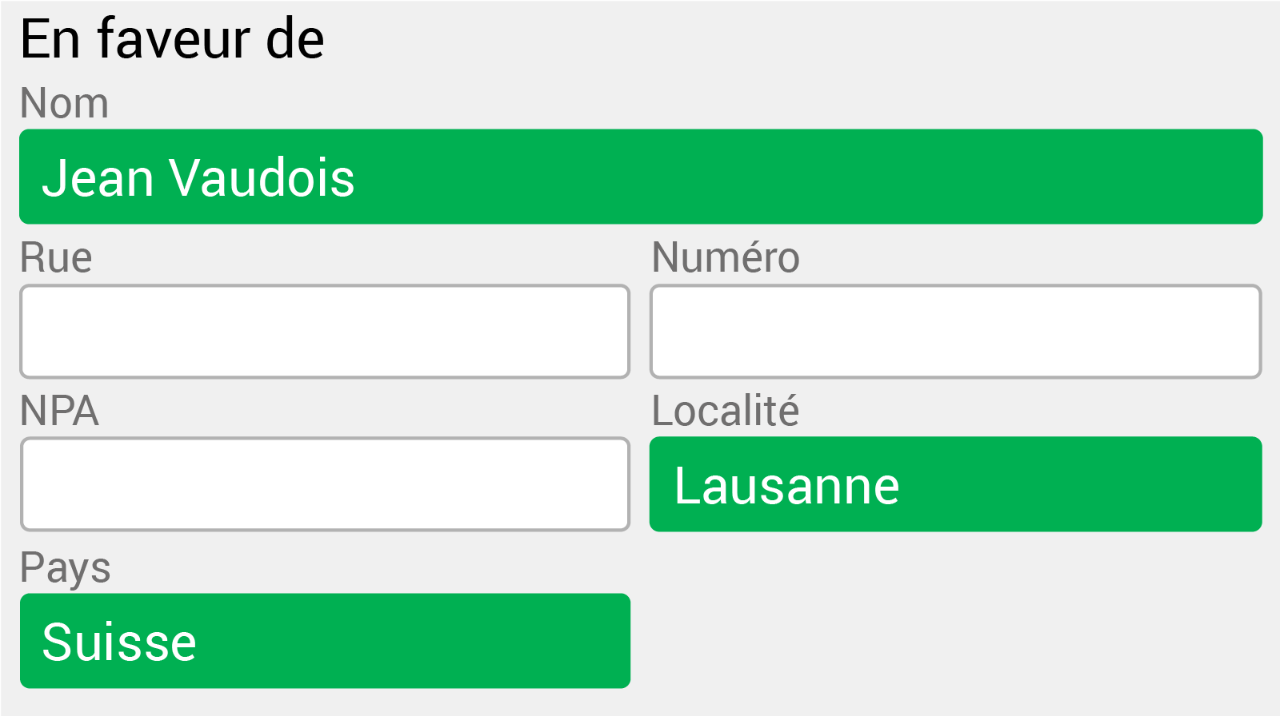
A structured address is a postal address split into specific, standardized fields (name, street, number, postal code, town, and country) so that QR bills, for example, can be processed more easily and reliably. Previously, all the information was contained on a single line, in a non-standardized format known as AdrLine.
Example of a fully structured address
<Nm>Jean Vaudois</Nm>
<PstlAdr>
<StrtNm> Rue de la Gare </StrtNm>
<BldgNb> 24 </BldgNb>
<PstBx>CP 2002</PstBx>
<PstCd>1000</PstCd>
<TwnNm> Lausanne </TwnNm>
<Ctry>CH</Ctry>
</PstlAdr>
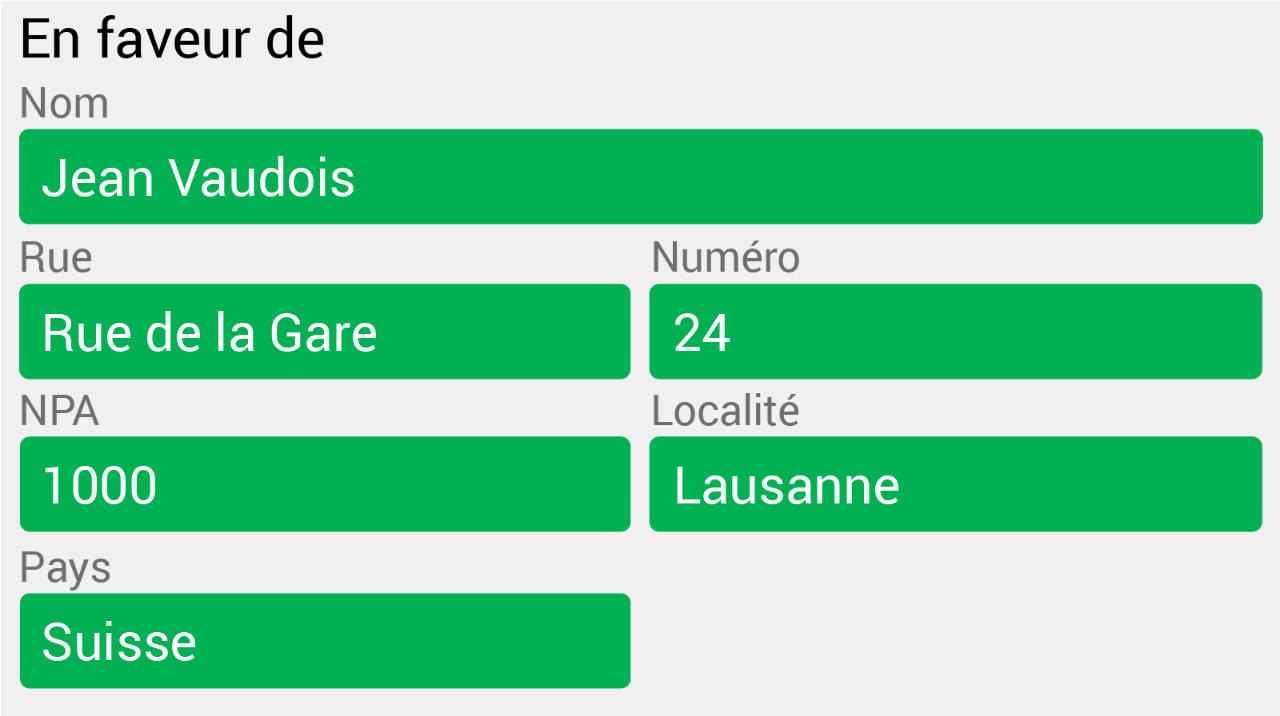
A hybrid address – available since 21 November 2025 – is used mainly in international payments (ISO 20022/SWIFT). It combines standardized fields (town and country) with non-standardized lines (AdrLine). Hybrid addresses are designed to be an intermediate solution for companies still using unstructured addresses and which cannot yet move fully to the structured standard.
Example of a hybrid address
<PstlAdr>
<Nm>Jean Vaudois</Nm>
<PstCd>1000</PstCd>
<TwnNm>Lausanne</TwnNm>
<Ctry>CH</Ctry>
<AdrLine>Rue de la Gare 24</AdrLine>
<AdrLine>CP 2002</AdrLine>
</PstlAdr>
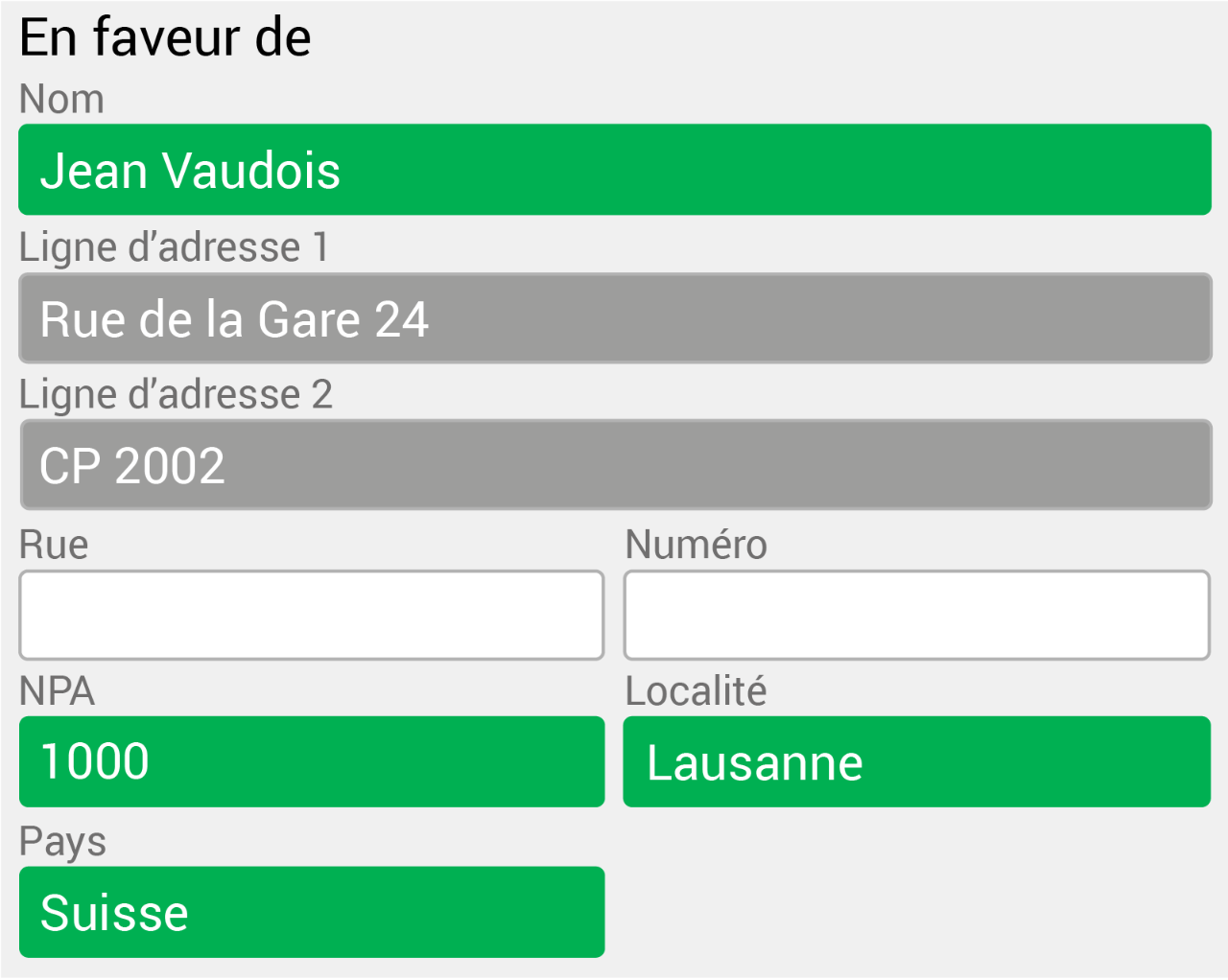
In this example, the street name and number are entered together in a non-standardized field (AdrLine).
With unstructured addresses, different parts of the address – such as the street name and number, town, and city – are entered in the same field.
Example of an unstructured address
<Nm>Jean Vaudois</Nm>
><PstlAdr>
<AdrLine> Rue de la Gare 24</AdrLine>
<AdrLine>CP 2002</AdrLine>
<AdrLine>1000 Lausanne</AdrLine>
</PstlAdr>
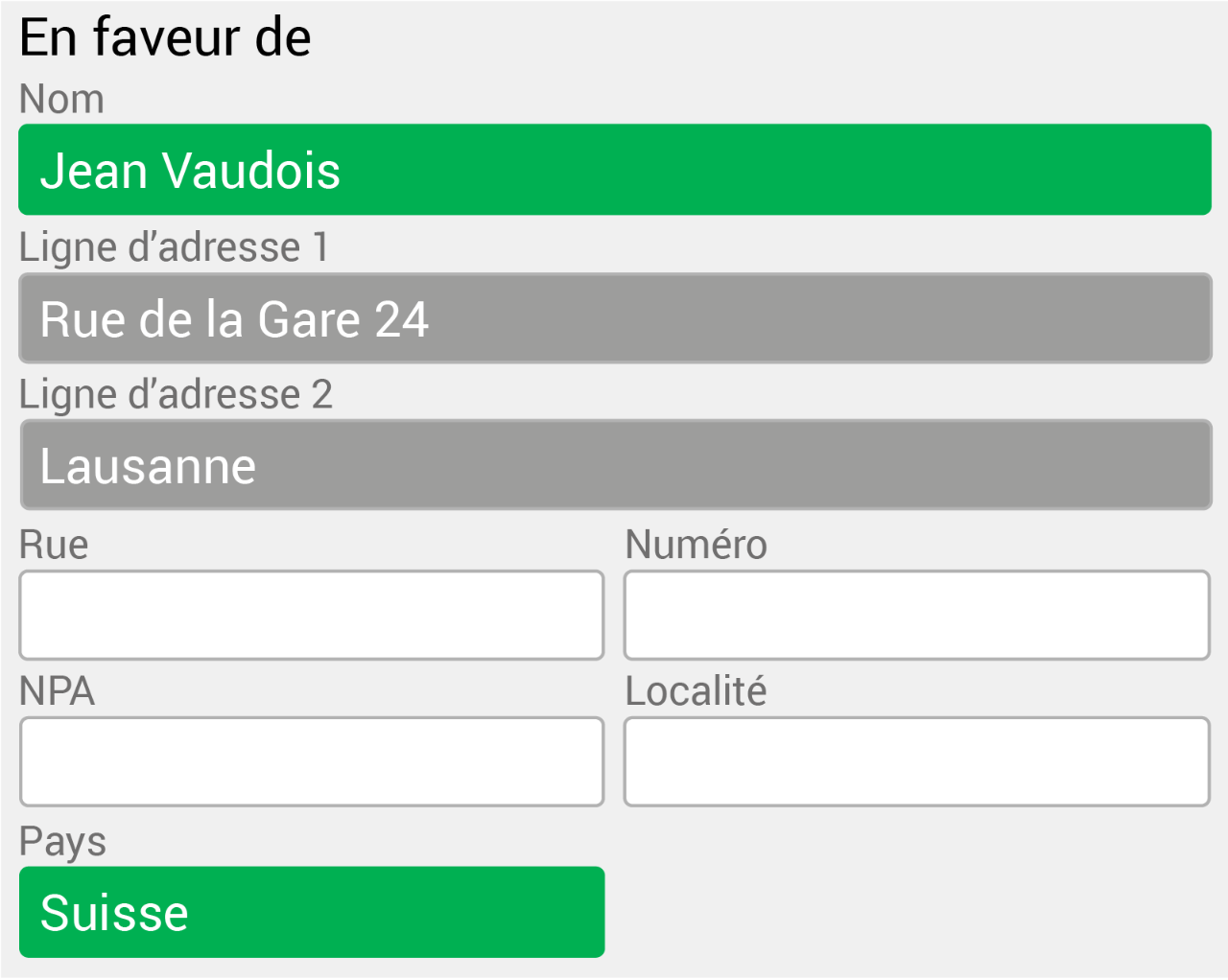
If you use completely unformatted addresses, your payment orders can still be processed. However, if any part of the address follows the standard format (for example, the country is entered in the corresponding field), your payment orders have a form of hybrid address that can no longer be processed. You need to bring these payment orders into line immediately with the new SIX requirements by entering at least the payee’s name, town, and country in the corresponding fields.
Banks will reject all standing-order payments with non-standard addresses and an execution date after 14 November 2026.
You should check your standing orders and amend the payee’s address if it is not properly formatted.
What to do
- If your standing order was created using a QR bill from one of your suppliers, you should request a new one. Once you have received it, update your standing order accordingly.
- If your standing order was created using an ordinary payment order without a QR code, simply check the address and make sure the information is entered in the corresponding standardized fields.
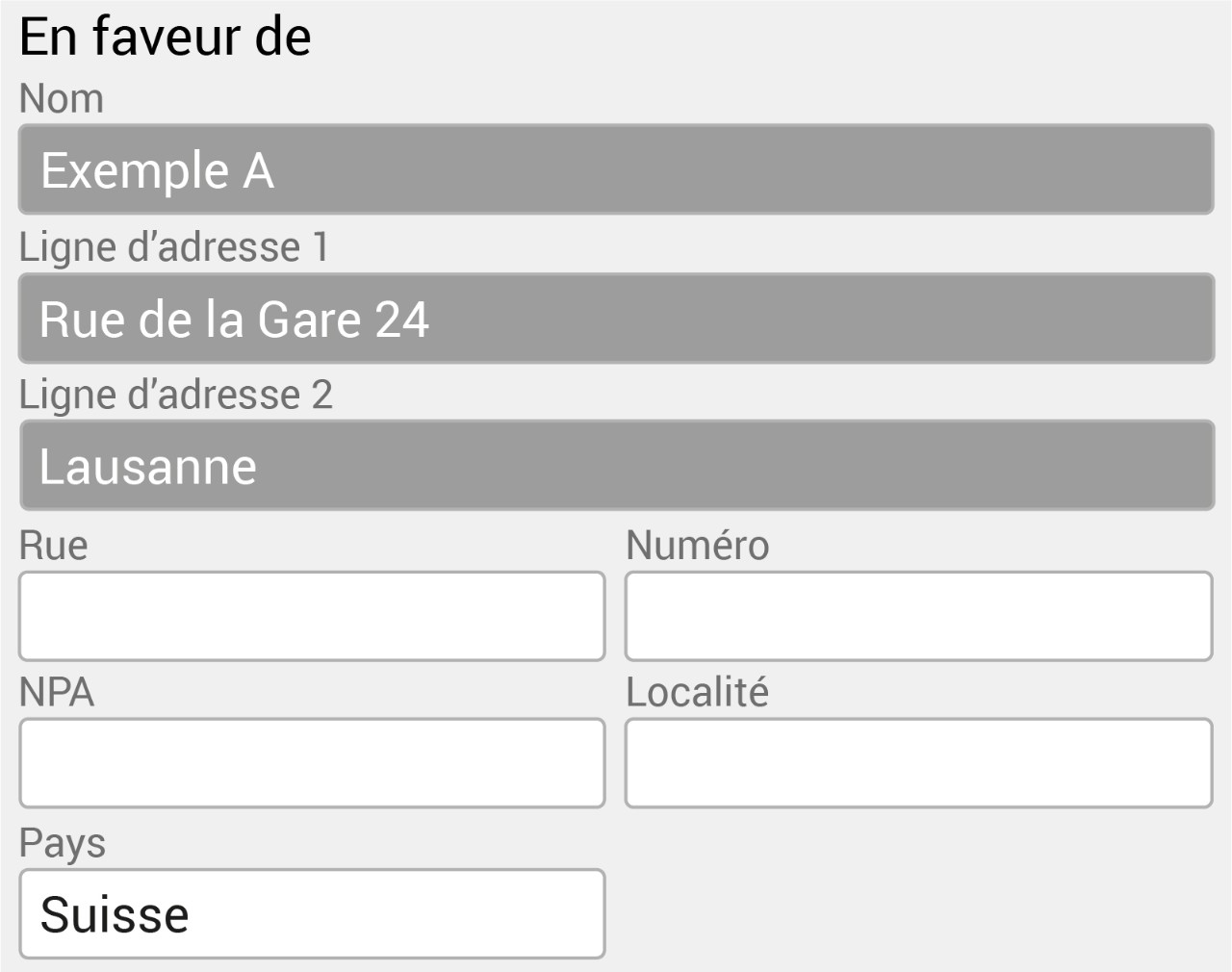
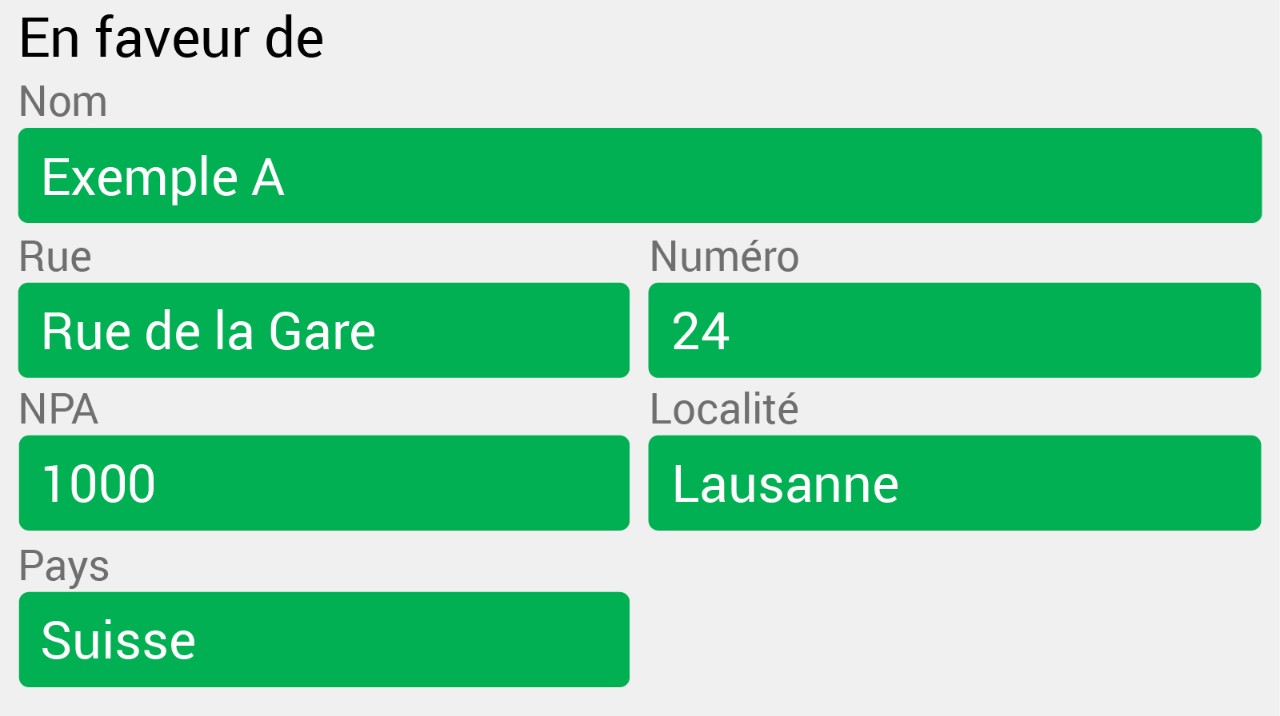
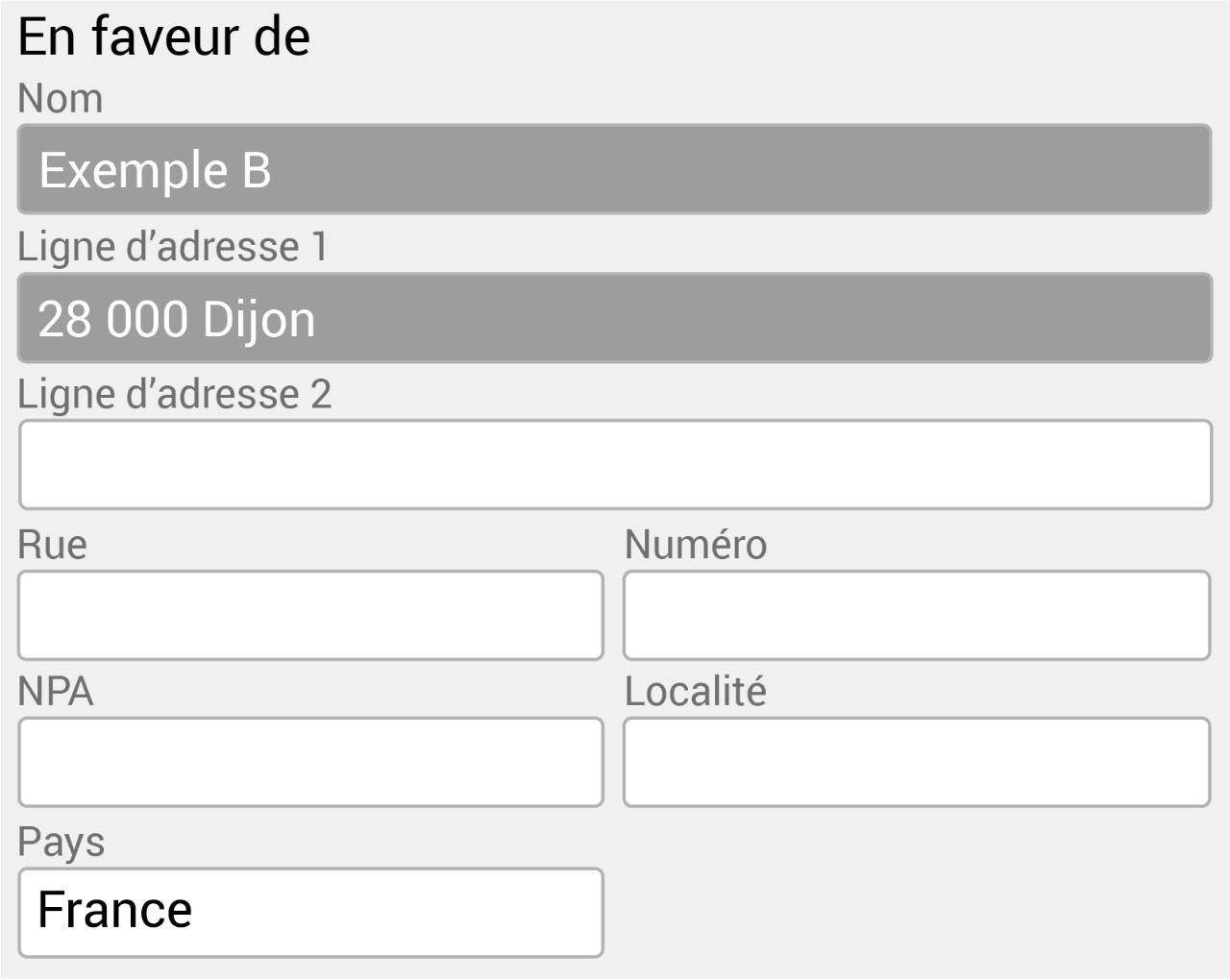
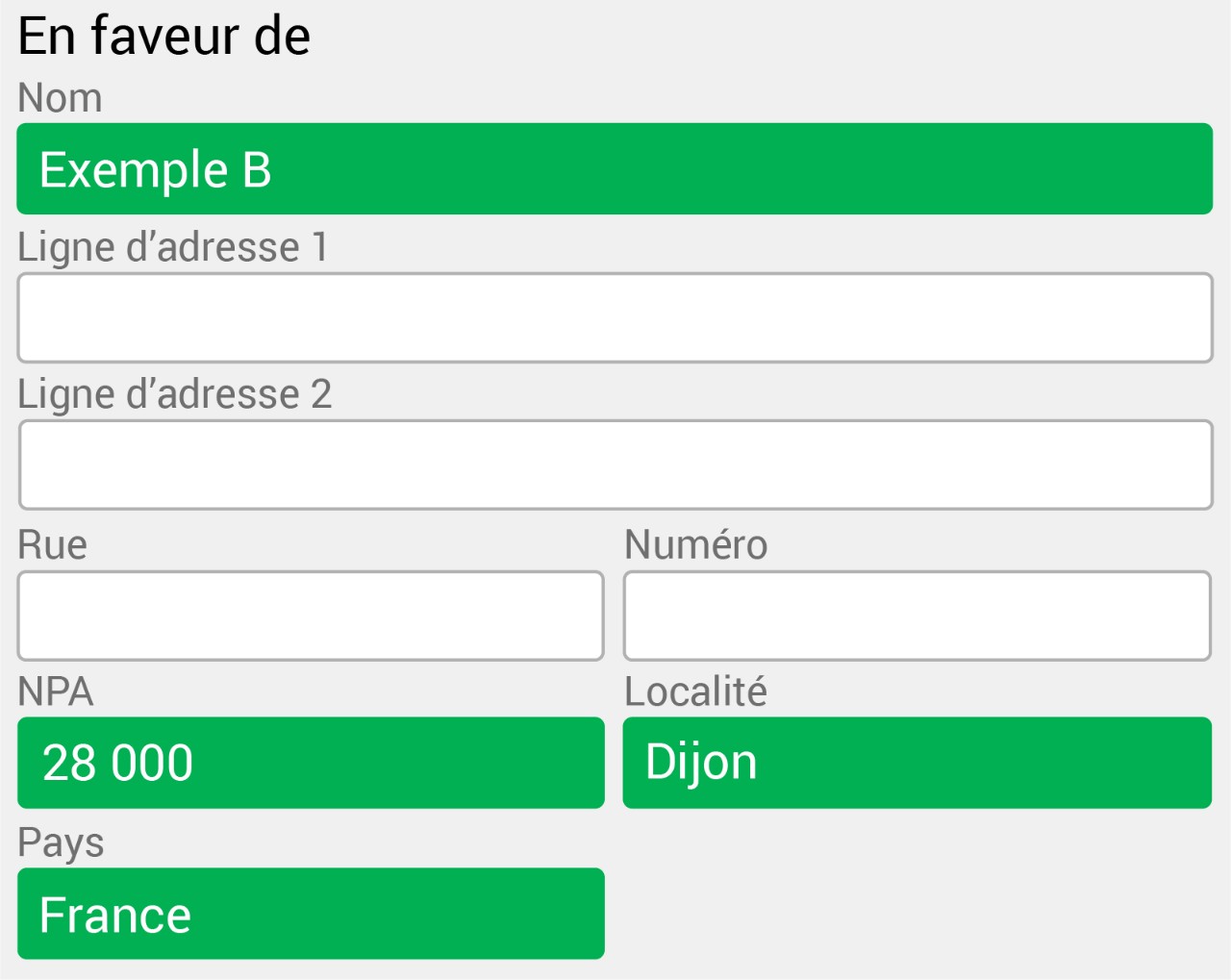
Financial institutions will reject all payments with non-standard addresses and an execution date after 14 November 2026. If you send out QR bills with non-standard addresses too close to this deadline, your clients will not be able to pay them. You will need to send your clients new QR bills that follow the standard format.
Financial institutions will reject all payments with unstructured addresses and an execution date after 14 November 2026.
Payments using hybrid addresses must already meet the new requirements or they will not be processed.
Contact your software provider to make sure your billing software has this feature. If not, find out when it will be added and schedule your QR bill/payment order update accordingly.
Check your databases to make sure your client data are accurate and complete and that they follow the standard format. You can then enter the data in your QR bills.
Check all your order forms – including paper forms and those on your website – to make sure clients can enter their full address in the standard format.
With instant payments, you can transfer money from one Swiss bank account to another in less than ten seconds. Regardless of when you enter your payment order – evenings, weekends, and holidays included – it will be executed immediately, with the payer’s account debited and the beneficiary’s account credited nearly simultaneously.

Bank transfers in less than ten seconds

24/7/365 – no exceptions
Starting on 20 August 2024, Switzerland’s largest banks will be equipped to handle instant payments between their customers and customers of other participating banks. This service will expand to include all Swiss banks two years later – that means all account-to-account payments in Switzerland will take place in just a few seconds.
- Up-to-date account balance: Account balances are always up to date since payments are credited and debited simultaneously.
- No credit risk: Instant payments are immediately recorded on both ends of the transaction. Taken together, this means no uncertainty and no credit risk for either the payer or the payee.
- Execution confirmation: Both parties have the possibility of receiving immediate confirmation when a payment is executed. That way the payer can be sure that the amount has been credited to the beneficiary – which is particularly useful for urgent payments.
- Faster payment processing: With instant payments, transfers are processed immediately. This can make a real difference when it comes to delivery-against-payment transactions.
- Improved cash flow management: Because instant payments take place in real time, you’re in a better position to manage and plan your cash flows. You know immediately when payments are received – and that can translate into crucial efficiency gains.
- Improve your customers’ experience: Instant payments streamline your customers’ experience. They’re able to pay their bills and make purchases in the blink of an eye – a clear improvement on today’s standard payment methods. And happy customers are repeat customers!
- Potential savings: Instant payments can also save your company money, for example by reducing the need to issue payment reminders.
Under current rules, the maximum payment amount will be CHF 20,000. The payer’s bank may impose additional amount limits.
Instant payment can be made at any time of the day or night, any day of the week.
You simply need an account with a participating bank. Beyond that, your bank may apply certain conditions, such as requiring access to its web-based or mobile banking services.
BCV is currently only equipped to receive instant payments, but Switzerland’s largest banks have been able to handle instant payments between their customers and customers of other participating banks since 20 August 2024. Starting in 2026, all Swiss banks will be able to process instant payments. That means all account-to-account payments in Switzerland will take place in just a few seconds.
- In 2022, red and orange payment slips were permanently discontinued in Switzerland and replaced by QR bills.
- The ISO 20022 standard replaced the various proprietary formats used by banks and the post office with the PAIN format (for payments) and the CAMT format (for advices and notifications).
- The e-billing system evolved into the eBill service.
- The Swiss financial sector published recommendations on the implementation of the EBICS standardized communication protocol.


